
Most claim denials are preventable. Many start long before a claim is ever submitted, when inconsistent claim creation, manual checks, and limited visibility allow small issues to pass through unnoticed.
A modern claim processing system helps address this by standardizing how claims are built, validating information earlier, and flagging problems before they reach the payer.
In this eBook, you’ll see how EZClaim applies those capabilities to help you catch issues earlier and submit cleaner claims.
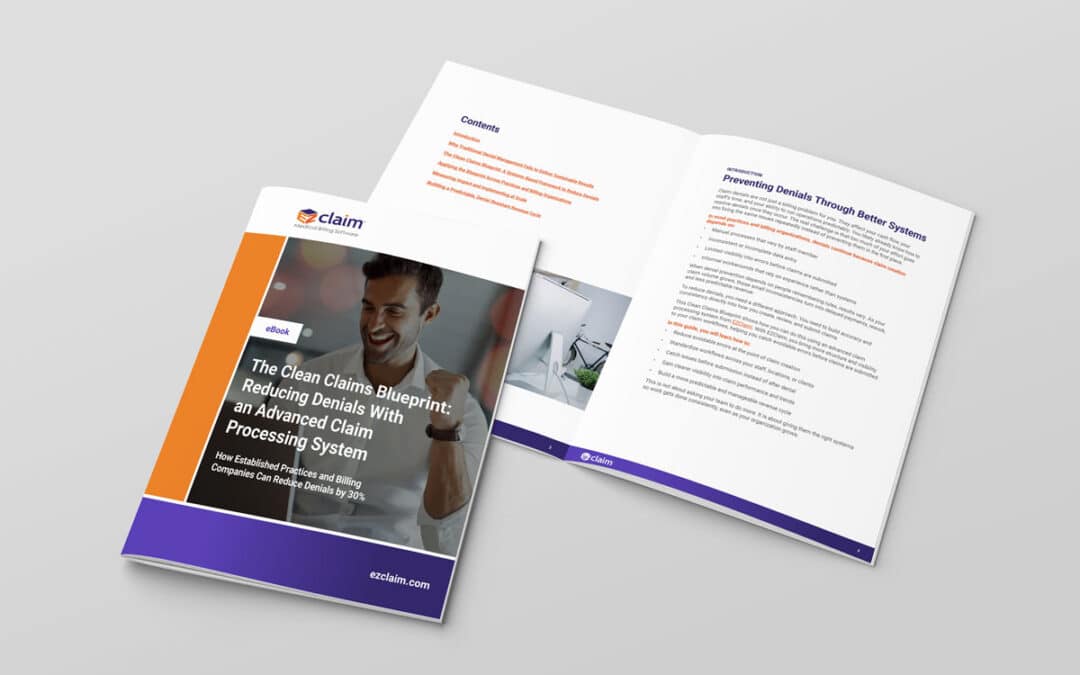
Discover How to Reduce Denials with EZClaim’s Advanced Claim Processing System
This eBook focuses on how denial reduction works when it is treated as a system-level process. You’ll see how a modern claim processing system supports more consistent execution by bringing structure to claim creation, applying validation earlier, and reinforcing repeatable workflows across teams and organizations.
What’s inside:
- A systems-based approach to reducing claim denials before submission
- Practical steps to standardize and automate claim workflows
- How a modern claim processing system helps catch errors earlier
- Ways to maintain consistency across teams, locations, and clients
- Guidance for reducing rework and improving revenue predictability
Stop managing denials after the fact.
Frequently Asked Questions
K
L
What are the most common causes of claim denials today?
Claim denials are often driven by inconsistent data entry, missing or incorrect information, and a lack of standardized workflows, issues that can be mitigated with a structured claim processing system.
K
L
How can practices reduce claim denials without adding staff?
Practices can reduce denials by standardizing how claims are created and reviewed and by validating information earlier in the process. This shifts work upstream and reduces reliance on manual review.
K
L
Why is a claim processing system critical for denial reduction at scale?
A claim processing system like EZClaim enforces consistency, automates error detection, and provides visibility into claim performance, enabling denial reduction to be repeatable and sustainable.
